AI and Social Engineering: The New Threat Landscape
Emerging Threats
How AI is Changing Social Engineering
Artificial intelligence is fundamentally transforming the threat landscape. Cybercriminals are now weaponizing the same AI technologies that power legitimate business tools to create more convincing, scalable, and dangerous social engineering attacks.
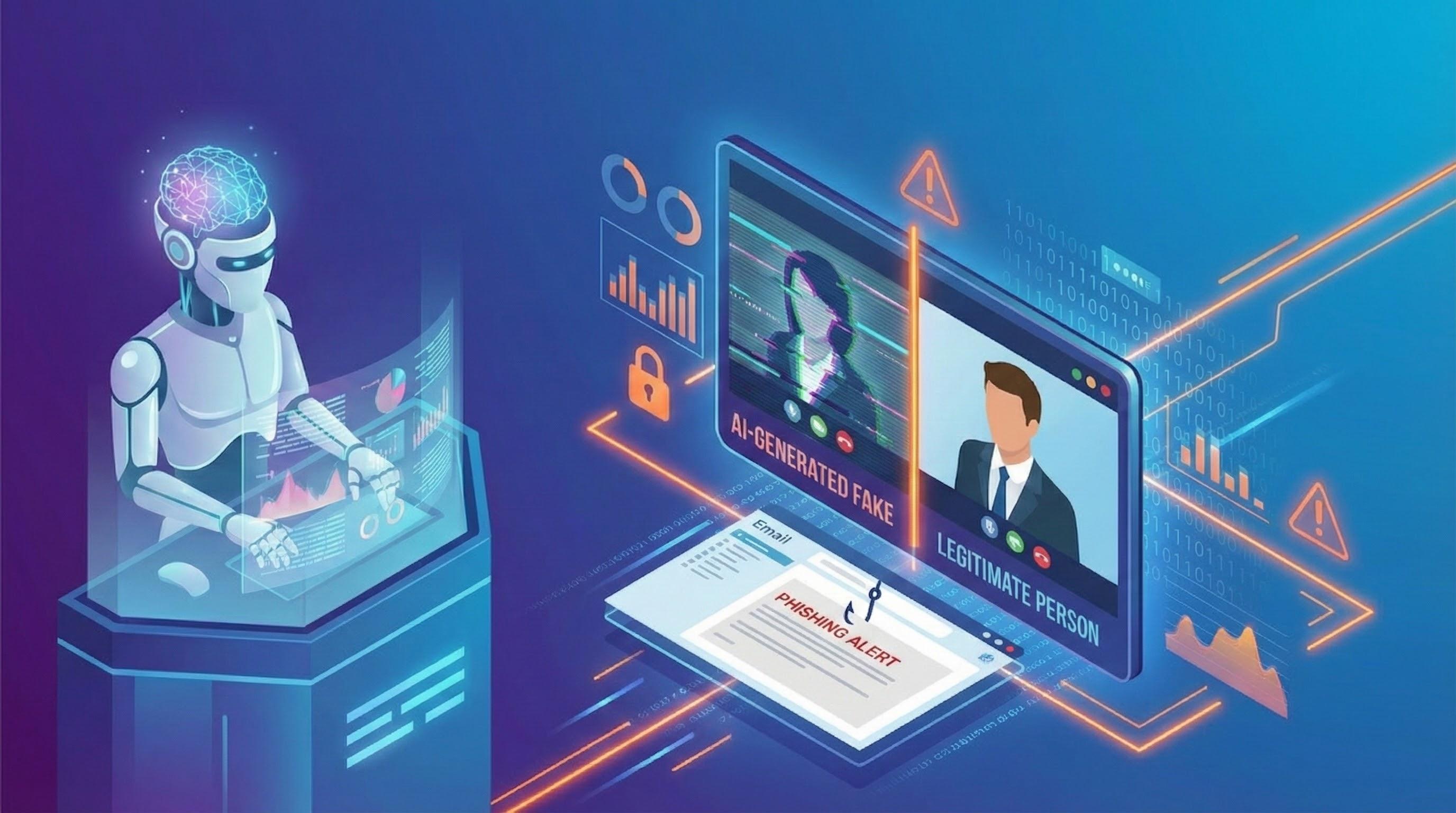
Traditional phishing emails were often easy to spot—poor grammar, generic greetings, and obvious inconsistencies gave them away. AI has changed this equation dramatically. Modern language models can generate flawless, contextually appropriate text in any language. Voice cloning technology can replicate anyone's voice from just a few seconds of audio. And deepfake video is becoming increasingly difficult to distinguish from reality.
The democratization of AI tools means that sophisticated attack capabilities once reserved for nation-state actors are now accessible to ordinary cybercriminals. A attacker no longer needs advanced technical skills to launch convincing social engineering campaigns—they need only access to readily available AI services.
This shift requires organizations to fundamentally rethink their approach to security awareness. The traditional advice to "look for grammar errors" or "be suspicious of generic greetings" is no longer sufficient. Employees must develop new instincts for an era where AI-generated content is virtually indistinguishable from human-created content.
AI-Powered Social Engineering Techniques
Attackers are leveraging AI across multiple vectors to enhance their social engineering capabilities:
- Deepfake Voice Cloning: AI can now clone a person's voice from as little as three seconds of audio. Attackers use this to impersonate executives in phone calls, instructing employees to transfer funds or share sensitive information. These "vishing" attacks are particularly effective because voice has traditionally been considered a reliable form of identity verification.
- Deepfake Video: Real-time deepfake technology enables attackers to impersonate anyone in video calls. While still evolving, this technology has already been used in successful attacks. As video conferencing becomes standard for business communication, this attack vector will grow increasingly dangerous.
- AI-Generated Phishing Emails: Large language models can craft highly personalized, grammatically perfect phishing emails at scale. These messages can incorporate context from LinkedIn profiles, company websites, and social media to create convincing pretexts. AI can also adapt message tone and style to match legitimate communications from specific organizations.
- Automated Reconnaissance: AI tools can rapidly gather and analyze open-source intelligence about targets—processing LinkedIn connections, news articles, social media posts, and company information to build detailed profiles. This intelligence enables highly targeted attacks that reference real relationships, projects, and events.
- AI Chatbot Attacks: Malicious chatbots can engage victims in extended conversations, building rapport and trust before extracting sensitive information. Unlike human attackers, AI chatbots can maintain consistent personas across thousands of simultaneous conversations.
Real Examples of AI-Enhanced Attacks
AI-powered social engineering is no longer theoretical. These attacks are happening now:
The $25 Million Deepfake Heist (2024)
In one of the most significant AI-enabled attacks to date, a finance worker at a multinational company was tricked into transferring $25 million after attending a video conference call where every other participant—including the company's CFO—was a deepfake. The employee initially suspected phishing but was convinced after the video call appeared to confirm the request's legitimacy.
CEO Voice Cloning Fraud
A UK energy company lost $243,000 when criminals used AI to impersonate the voice of the parent company's CEO. The managing director received a phone call that perfectly mimicked his boss's German accent and speech patterns, urgently requesting a wire transfer to a Hungarian supplier. The attack demonstrated how voice cloning can bypass traditional verification methods.
Hyper-Personalized Spear Phishing
Security researchers have documented campaigns using AI to generate thousands of unique, personalized phishing emails. Each message references specific details from the target's LinkedIn profile, recent company news, or social media activity. The level of personalization that once required hours of manual research can now be automated in seconds.
Why AI Makes Social Engineering More Dangerous
AI amplifies social engineering threats in several critical ways:
- Scale and Automation: AI enables attackers to launch sophisticated, personalized attacks against thousands of targets simultaneously. What once required dedicated human effort can now be fully automated, dramatically increasing the volume of high-quality attacks.
- Elimination of Tell-Tale Signs: Traditional indicators of phishing—poor grammar, spelling errors, awkward phrasing—are eliminated when AI generates content. Messages are fluent, professionally written, and appropriate in tone and context.
- Personalization at Scale: AI can analyze vast amounts of data about targets and incorporate relevant details into attacks. Every message can reference real colleagues, projects, and events—making generic "Dear Customer" phishing obsolete.
- Multi-Channel Attacks: AI enables coordinated attacks across email, voice, video, and chat—all from the same automated system. A target might receive a phishing email, followed by a deepfake voice call "confirming" the request.
- Continuous Learning: AI systems can analyze which attacks succeed and automatically optimize future attempts. This creates an arms race where attack sophistication increases continuously.
Detecting AI-Generated Social Engineering
While AI attacks are increasingly sophisticated, they're not perfect. Here are indicators that may suggest AI involvement:
For Deepfake Audio
- Unusual pauses or unnatural rhythm in speech
- Audio artifacts or robotic undertones
- Inability to respond naturally to unexpected questions
- Emotional inflection that doesn't match the content
For Deepfake Video
- Unnatural blinking patterns or eye movements
- Inconsistent lighting or shadows on the face
- Blurring or distortion around facial edges
- Audio-video synchronization issues
For AI-Generated Text
- Overly perfect, almost sterile writing style
- Generic phrases that could apply to anyone
- Factual errors about specific details (names, dates, projects)
- Inconsistencies when pressed for details in replies
Defending Against AI-Powered Attacks
Protecting your organization requires updating security strategies for the AI era:
Updated Security Awareness Training
- Train employees that perfect grammar no longer indicates legitimacy
- Educate about deepfake capabilities and how to identify them
- Emphasize verification procedures over visual/auditory trust
- Conduct simulations using AI-generated content
Enhanced Verification Protocols
- Implement callback verification through independently verified numbers
- Establish code words or security questions for sensitive requests
- Require multi-person authorization for financial transactions
- Never trust identity based solely on voice or video appearance
Technical Defenses
- Deploy AI-powered email security that can detect AI-generated content
- Implement DMARC, DKIM, and SPF to prevent email spoofing
- Use deepfake detection tools for video verification
- Implement strong MFA across all systems
The Future of AI and Social Engineering
The intersection of AI and social engineering will continue to evolve rapidly. Organizations should prepare for:
- Real-time deepfakes: Video call deepfakes that are indistinguishable from reality
- Autonomous attack agents: AI systems that conduct entire attack campaigns without human intervention
- Adaptive attacks: Attacks that learn and adjust in real-time based on victim responses
- AI vs AI: Security tools using AI to detect and block AI-generated attacks
The organizations best positioned to defend against these evolving threats are those investing in continuous security awareness training, robust verification procedures, and adaptive technical defenses. The human element remains the critical factor—employees who understand AI capabilities and maintain healthy skepticism are your strongest defense.
Key Takeaway
AI has fundamentally changed social engineering by eliminating traditional warning signs and enabling personalized attacks at scale. Defense requires a shift from "look for mistakes" to "verify everything"—regardless of how legitimate a communication appears. Combining updated training, strict verification protocols, and AI-powered security tools provides the best protection against this evolving threat.
See it across your whole book of business
INFIMA is the complete human risk platform built for MSPs: multi-tenant training, phishing, dark web monitoring, and compliance across every client. Training and phishing start automatically on directory sync, white-labeled to your brand.
Continue Reading
Explore more guides to deepen your security knowledge.