Supply Chain Attacks: What They Are and How to Prevent Them
Cybersecurity Threats
What is a Supply Chain Attack?
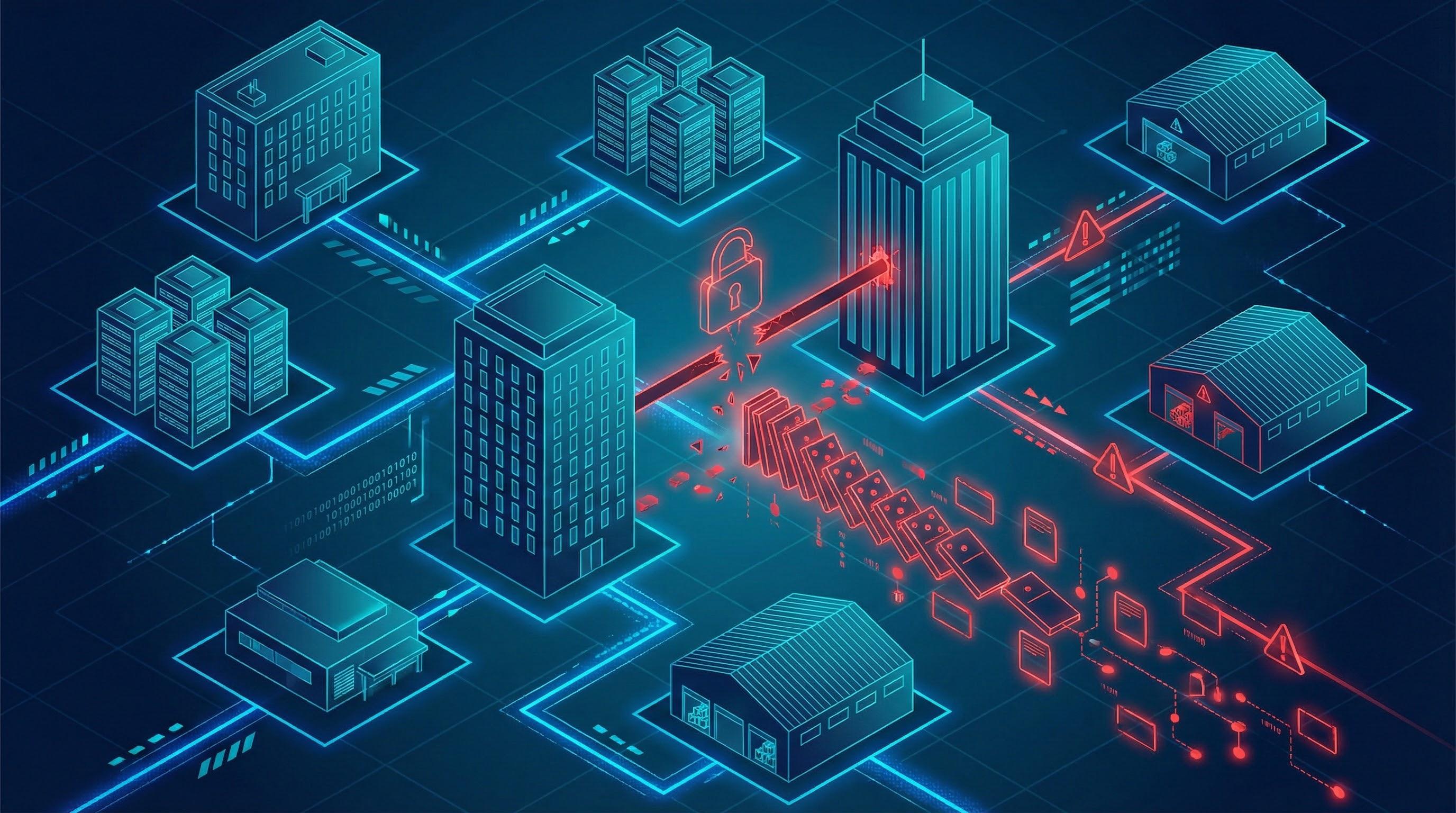
A supply chain attack occurs when cybercriminals compromise an organization by targeting a less-secure element in their supply network—whether that's a software vendor, hardware manufacturer, or third-party service provider.
Rather than attacking a target directly, threat actors exploit the trust relationships that organizations have with their vendors and partners. By compromising a single supplier, attackers can potentially gain access to hundreds or thousands of downstream customers—making supply chain attacks extraordinarily efficient from an attacker's perspective.
The concept isn't new. Consider the infamous 1982 Chicago Tylenol tampering case, where an unknown criminal acquired bottles from retailers, added cyanide, and returned them to shelves. The product itself was fine at the source—the vulnerability was introduced somewhere in the supply chain. Modern cyber supply chain attacks follow a similar pattern: attackers insert malicious code or access points into otherwise legitimate products and services.
These attacks are particularly insidious because they often bypass traditional security measures. Organizations trust their vendors, and security tools typically don't flag updates from known, legitimate software providers. This trust-based relationship is precisely what attackers exploit.
Types of Supply Chain Attacks
Supply chain attacks manifest in various forms, each targeting different links in the chain:
- Software Supply Chain Attacks: Attackers compromise software development or distribution processes to insert malicious code into legitimate applications. This can occur through compromised development environments, poisoned code repositories, or hijacked update mechanisms. Once the tainted software is deployed, attackers gain access to all organizations using it.
- Hardware Supply Chain Attacks: Malicious components or firmware can be inserted during manufacturing, shipping, or installation. These attacks are harder to detect and remediate because they exist at the physical level. Hardware implants can provide persistent backdoor access that survives software reinstallation.
- Third-Party Service Provider Attacks: Organizations often grant vendors access to their systems for maintenance, support, or integration purposes. Attackers who compromise these service providers can leverage that access to reach their ultimate targets. This category includes attacks on MSPs, which have become increasingly common.
- Open Source Dependency Attacks: Modern software relies heavily on open source libraries. Attackers target popular packages by compromising maintainer accounts, submitting malicious pull requests, or creating "typosquatting" packages with names similar to legitimate ones. A single compromised dependency can affect thousands of applications.
Notable Supply Chain Attack Examples
Several high-profile attacks have demonstrated the devastating potential of supply chain compromises:
SolarWinds / Sunburst (2020)
Perhaps the most significant supply chain attack to date, the SolarWinds breach affected approximately 18,000 organizations including multiple U.S. government agencies and Fortune 500 companies. Attackers compromised SolarWinds' build environment and inserted malicious code into the Orion IT monitoring platform. The backdoor, dubbed "Sunburst," was distributed through routine software updates, giving attackers access to sensitive networks for months before detection.
The attack began with a phishing campaign that gave attackers initial access to SolarWinds' network. From there, they spent months understanding the development environment before inserting their backdoor—demonstrating the patience and sophistication of nation-state threat actors.
Kaseya VSA (2021)
The REvil ransomware gang exploited vulnerabilities in Kaseya's VSA remote monitoring and management (RMM) software to deploy ransomware to MSPs and their clients. Because MSPs use RMM tools to manage multiple client environments, this single attack vector enabled mass ransomware deployment across an estimated 1,500 businesses worldwide.
This attack highlighted the particular risks faced by MSPs and their clients—the same tools that enable efficient IT management can become devastating attack vectors when compromised.
Target Data Breach (2013)
Attackers gained access to Target's network through a third-party HVAC vendor. Using credentials stolen from the vendor, they moved laterally through Target's network until reaching the point-of-sale systems. The breach ultimately exposed data from 40 million credit and debit cards and personal information from 70 million customers.
This early example demonstrated how attackers use smaller, less-secure vendors as stepping stones to reach larger, more valuable targets.
NotPetya (2017)
The NotPetya malware was distributed through a compromised update to M.E.Doc, a Ukrainian accounting software. While initially targeting Ukrainian organizations, the malware spread globally, causing an estimated $10 billion in damages. Major corporations including Maersk, Merck, and FedEx suffered significant operational disruptions.
Why Supply Chain Attacks Are Increasing
Several factors are driving the growth in supply chain attacks:
- Increased Interconnection: Modern organizations depend on extensive networks of vendors, partners, and service providers. Each connection represents a potential attack vector. The average enterprise now has relationships with hundreds of third-party vendors.
- Improved Direct Defenses: As organizations strengthen their perimeter security, attackers seek alternative paths. Targeting a less-secure vendor provides a way to bypass sophisticated defenses.
- High Return on Investment: Compromising a single software vendor can provide access to thousands of customers. This multiplication effect makes supply chain attacks extremely attractive to sophisticated threat actors.
- Complex Software Dependencies: Modern applications contain hundreds of dependencies, each representing a potential vulnerability. Keeping track of—let alone securing—every component in a software supply chain has become extraordinarily difficult.
- Implicit Trust: Organizations inherently trust updates from known vendors. Security tools often whitelist vendor traffic and software, providing attackers with a trusted channel into the target environment.
The Impact on MSPs and Their Clients
Managed Service Providers face unique supply chain risks. MSPs are both potential targets and potential attack vectors:
MSPs as High-Value Targets
MSPs have privileged access to multiple client environments, making them extremely attractive targets. A single compromised MSP can provide attackers with access to dozens or hundreds of client networks. The tools MSPs use for remote management—while essential for efficient service delivery—become powerful weapons in the wrong hands.
Cascading Risk to Clients
When an MSP is compromised, all their clients face potential exposure. Small and medium businesses often lack the security resources to detect or respond to sophisticated attacks that enter through their MSP relationship. They depend on their MSP for security—a dependency that attackers exploit.
Tool and Software Risks
MSPs rely on various software tools for remote monitoring, management, backup, and security. Each of these represents a potential supply chain vulnerability. The Kaseya attack specifically demonstrated how RMM tools can be weaponized against MSPs and their clients.
How to Protect Against Supply Chain Attacks
While supply chain attacks are challenging to prevent entirely, organizations can significantly reduce their risk:
Vendor Risk Assessment
- Evaluate the security practices of vendors before engagement
- Request and review SOC 2 reports, security certifications, and penetration test results
- Include security requirements in vendor contracts
- Conduct ongoing monitoring of critical vendor relationships
Zero Trust Principles
- Never implicitly trust any user, device, or connection—including those from vendors
- Implement least-privilege access for all vendor connections
- Segment networks to limit lateral movement if a breach occurs
- Verify and validate continuously, not just at initial connection
Security Awareness Training
- Train employees to recognize phishing—the initial access vector for many supply chain attacks
- Educate staff about vendor impersonation tactics
- Establish verification procedures for vendor communication
- Create a culture where questioning unusual requests is encouraged
Monitoring and Detection
- Monitor for unusual behavior from trusted software and connections
- Implement endpoint detection and response (EDR) across all systems
- Log and analyze network traffic, particularly from vendor systems
- Subscribe to threat intelligence feeds for early warning of vendor compromises
Building a Supply Chain Security Program
A comprehensive approach to supply chain security includes these key elements:
- Inventory your supply chain: Document all vendors, software, and third-party connections. You can't protect what you don't know about.
- Categorize by risk: Not all vendors pose equal risk. Focus resources on those with access to sensitive data or critical systems.
- Establish security requirements: Define minimum security standards for vendors based on their risk category.
- Implement ongoing assessment: Security isn't a one-time evaluation. Continuously monitor and reassess vendor relationships.
- Prepare incident response plans: Have procedures ready for responding to a supply chain compromise, including vendor notification and containment.
- Maintain software bills of materials (SBOM): Track the components in your software to quickly identify exposure when vulnerabilities are discovered.
Key Takeaway
Supply chain attacks exploit the trust inherent in vendor relationships. Defense requires a combination of thorough vendor assessment, zero trust architecture, continuous monitoring, and employee awareness training. While no organization can eliminate supply chain risk entirely, those that implement comprehensive security programs significantly reduce their exposure and improve their ability to detect and respond to compromises quickly.
Ready to strengthen your security posture?
Get in touch to learn how INFIMA can help protect your organization with automated security awareness training and phishing simulations.
Continue Reading
Explore more guides to deepen your security knowledge.